When a Regular Window Wash Is Not Enough: Hard Water, Overspray and Construction Residue
Some dirt sits on top of the glass, and some of it has started to bond with it.
October 20, 2026 · 4 min read
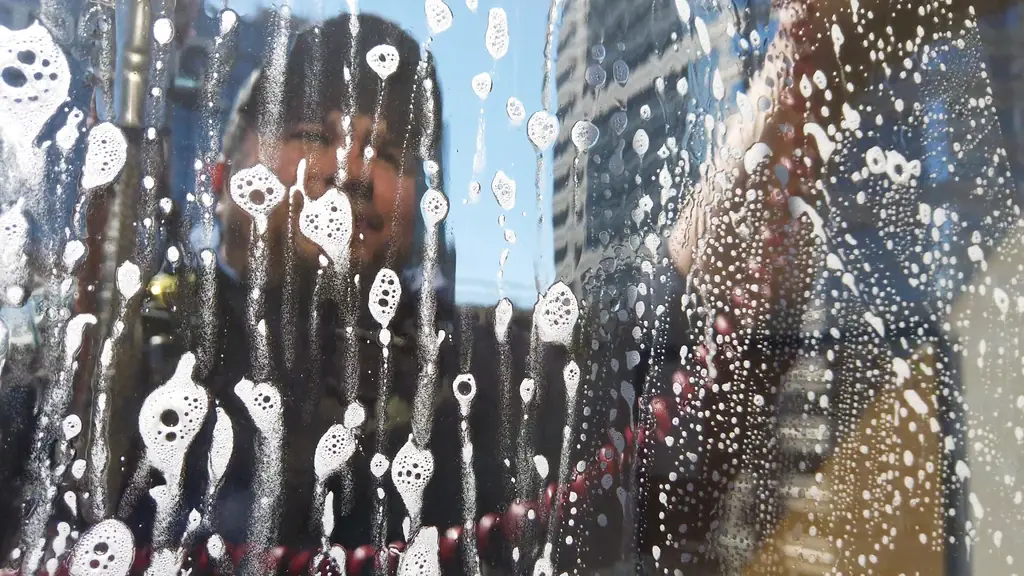
Most window dirt comes off with water, the right solution and a good squeegee technique. Some does not. If you have ever scrubbed a spot on a window and watched it stay exactly where it was, you have run into the second kind. It looks like dirt, but it behaves like part of the glass. Knowing the difference can save you money and keep you from damaging the window while trying to fix it.
Why some stains will not wipe off
Hard water carries dissolved minerals, mainly calcium and magnesium. When a drop of it lands on glass and dries, the water leaves, but the minerals stay. One drop leaves a faint ring. A sprinkler head that hits the same window every morning for a season leaves a pattern of rings that build into a crust. That crust is mineral scale, and it is not soluble in plain water, which is why washing the window does nothing.
If scale is left for months or years, it can start to etch the glass. Etching means the surface itself has been slightly eaten away, and at that stage even removing the deposits may not give you a perfectly clear window again. That is the strongest argument for dealing with spotting early.
The usual suspects
- Sprinkler overspray. Irrigation that reaches the glass leaves mineral spotting in a repeating arc, and it tends to be worst at the lower windows nearest the landscaping.
- Hard water and mineral scale. Calcium build-up shows up as a white or cloudy film that does not rinse off.
- Rust run-off. Water that flows over steel or iron above the window carries stains down the glass.
- Aluminum frame oxidation. Chalky residue from frames can streak onto the surrounding glass.
- Concrete slurry and mortar. These are alkaline and cure hard, so they are much easier to deal with early than after they set.
A building might have several of these at once, which is why the first step is a close look at the glass, not a guess.
A homeowner's account
Kelly Port, a Google reviewer, put it well in her Google review of Premier. She wrote that her windows looked incredible, that they were "so dirty that a regular washing wouldn't do," and that they "had to be scoured with steel wool." That is not a casual thing to do to glass. It works in the hands of someone who knows how, and it can leave scratches in the hands of someone who does not. If you are considering a heavy abrasive on your own windows, test a very small area first, or ask a professional to do it.
Post-construction cleaning is its own job
New buildings and renovations bring their own residue. Stickers, tape, labels, paint splatter, caulk, mortar and fine construction dust all end up on glass, and the dust is the sneaky one. It gets into window tracks and sills and goes everywhere once someone wipes it. Cleaning it without scratching the glass takes patience and the right tools, which is why general contractors usually schedule a dedicated post-construction window cleaning before handover.
Premier offers post-construction window cleaning, which ends with a final walk-through with the project manager, and a separate restoration cleaning service for glass that has already been stained or etched. The distinction matters. Post-construction cleaning removes what the trades left behind. Restoration cleaning deals with what time and water did.
How to tell which one you need
Run your fingernail lightly across a spot. If you feel a raised bump, you are likely dealing with deposit or residue sitting on the surface. If the glass feels smooth but looks cloudy or rainbowed in certain light, the damage may have started to go into the surface. Both are worth showing to a professional, because the right method depends on what the contaminant is and what the glass is made of. Coated, tinted and tempered glass can each react differently to aggressive treatments.
Good questions to ask before anyone starts: what is this deposit, how will you remove it, and what are the risks to the glass or the coating? You want a contractor who tests a small area, explains the method and tells you honestly if a window may not come fully clear.
Preventing the next round
Prevention is simple, if a little boring. Adjust sprinklers so they do not hit the windows. Fix leaking gutters and downspouts that spray the glass. Keep a regular cleaning schedule so mineral deposits do not have time to build. And if a project is going on nearby, clean the glass soon after it ends, not months later.
If you are looking at windows that do not respond to a regular wash, call Premier at (267) 534-5198. Every estimate is free, and the team can tell you whether you need a standard cleaning, post-construction cleaning or restoration work.
Premier Window Cleaning, LLC, (267) 534-5198
Call (267) 534-5198More articles
How Often Should a Philadelphia Commercial Building Have Its Windows Cleaned?
There is no single number that fits every building, but there is a sensible way to land on yours.
Certified Roof Anchors: What Property Managers Should Ask Before High-Rise Window Cleaning
The anchor points on your roof carry the entire weight of the job, so it pays to know who has checked them.