What Happens When the Weather Turns on a High-Rise Window Cleaning Job
Work at height stops when conditions say so, and a good contractor plans for it.
October 20, 2026 · 3 min read
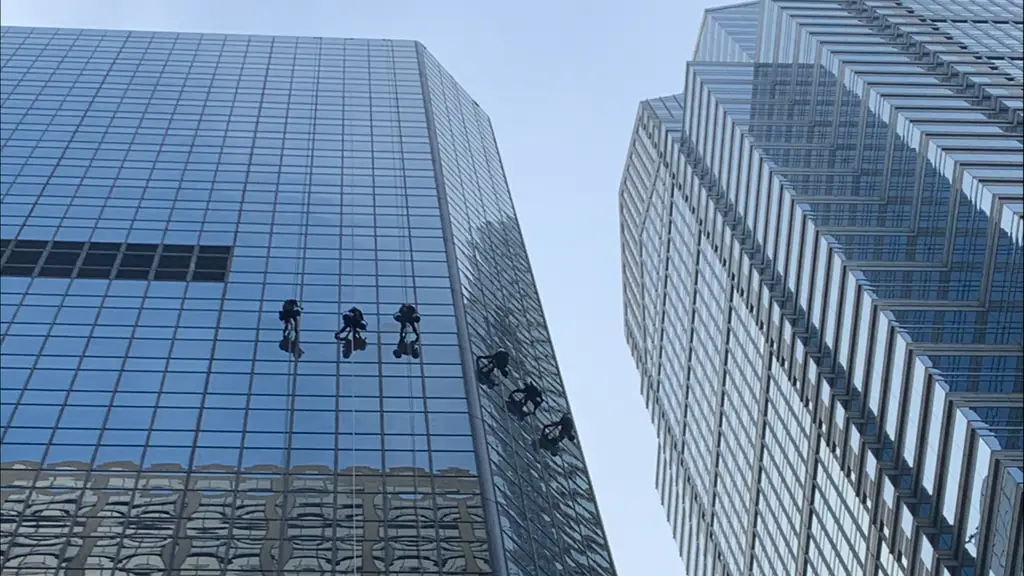
You have a window cleaning scheduled for Thursday, tenants have been told, and the forecast on Wednesday night is looking rough. Will the crew show up? Will they stop halfway? Who decides? These are fair questions from anyone who manages a tall building, and the answers say a lot about how a contractor thinks about safety.
What stops the work
Premier Window Cleaning suspends work at height in four kinds of conditions: high winds, thunderstorms and lightning, icy conditions, and poor visibility. These are the standard hazards of working on a rope or platform against the side of a tall building, and the company treats them as non-negotiable. Put plainly, safety comes first, and the job is rescheduled promptly.
None of this is about being cautious for its own sake. It follows from how the work is done, and each of the four conditions affects it differently.
Wind is different up there
The wind you feel at street level is not the wind at the thirtieth floor. Tall buildings shape the air around them, and gusts speed up and swirl along the facade, especially around corners. A technician on a rope or a suspended platform can be pushed off the glass, swung sideways or made unable to control their position. Wind also turns cleaning solution and water into spray that goes where it should not. A day that feels merely breezy on the sidewalk can be unworkable on the roof.
Lightning and ice
Lightning is simple. Nobody should be hanging from steel equipment on the side of the tallest structure in the neighborhood while a thunderstorm is nearby. Work stops, the crew gets down, and it waits for conditions to clear.
Ice is quieter but just as serious. Frozen roofs and ledges make it unsafe to rig, to walk and to reach the edge. Ice on ropes, equipment or glass changes how everything behaves. It also falls: a sheet of ice loosened from an upper floor is a hazard to everyone below. Cold snaps in Philadelphia can bring this up fast, and it is one reason winter exterior work gets scheduled with some flexibility.
Poor visibility
Heavy fog, driving rain or snow can reduce what the crew and the ground team can see. High-rise work depends on people seeing one another and the situation around the building. When that is compromised, the job pauses.
What the safety system looks like
Weather is one piece of a larger safety program. Premier's technicians are IWCA-certified rope access professionals who train and recertify annually in fall protection, rope handling and rigging, aerial lift operation, first aid and emergency response. Equipment is inspected and documented. The company uses certified anchors, radios and check-ins, and on-site rescue equipment with trained rescue leads. On the ground, barricades and signage keep pedestrians out of the work zone, and protective padding and guards help protect facades. Regular safety meetings and dedicated safety leadership keep the practice current.
How to plan around weather
You cannot control the sky, but you can make weather delays painless.
- Tell tenants the date is a target and that a backup date may be needed.
- Ask your contractor how they communicate delays and how quickly they can offer a new date.
- Build some room into the schedule for jobs tied to an event, a sale or an inspection, so a one-day delay does not cause a crisis.
- Avoid booking high-rise work at the edge of the season when you have a hard deadline.
- Give the office a single point of contact on your side so decisions happen quickly.
Premier works with building management directly on this, and its customer commitments include clear communication and on-time performance. The goal is a prompt new date when conditions force a change, not a silent no-show.
A contractor who stops is a good sign
It can be frustrating when a cleaning gets pushed back. But think about the alternative. A contractor who always shows up, whatever the weather, is either not working at real height or is cutting a corner you would prefer not to find out about. The crew that packs up when a storm rolls in is the one that treats your building and its own people with care.
If you are planning a high-rise cleaning and want to talk through scheduling and weather contingencies, call Premier at (267) 534-5198. The office is open every day from 6 am to 4 pm, and the estimate is free.
Premier Window Cleaning, LLC, (267) 534-5198
Call (267) 534-5198More articles
How Often Should a Philadelphia Commercial Building Have Its Windows Cleaned?
There is no single number that fits every building, but there is a sensible way to land on yours.
Certified Roof Anchors: What Property Managers Should Ask Before High-Rise Window Cleaning
The anchor points on your roof carry the entire weight of the job, so it pays to know who has checked them.